|
You
are Here > ENHANCEMENT>
Shade/Shelter/Soil>
Chestnut, Sweet chestnut, Spanish chestnut
| Common
name: Chestnut, Sweet chestnut, Spanish
chestnut |
Botanical
name: Castanea sativa |
| Family: Fagaceae |
Maximum height: 30
to 40 metres |
|
|
|
Where found:
|
- Parks, gardens and farms for shade, timber,
nuts or specimen trees.
- Tolerates most soils except highly alkaline.
|
| Description: |
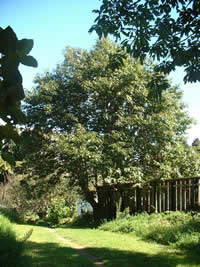
- Widespreading shapely deciduous tree with short stout trunk
and strong semi-erect branches. Coppices (reshoots after being
cut). Edible nuts. Potential for timber.
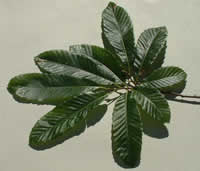
- Large leaves 10 to 20 centimetres long and narrow with coarse
teeth around the margins. Rich green turning yellow then dark
brown before falling in autumn.
- Male flowers form long creamy yellow catkins 15 to 25 centimetres
long. Female flowers are single or in clusters of 2 or 3 at the
base of catkins. Develop into sharp, spiny green capsules producing
one to three rounded nuts.
- Bark is smooth and silvery when young, developing to dark brown
and ridged, often in a spiral formation.
- Tolerant of drought. Dislikes strong and salt wind
- Wood properties: high heartwood content, light brown in colour,
ground durable. Slow and careful drying required.
- Used for posts and poles (by coppicing method), furniture, casks,
kitchenware.
|
|
|
Click
on image for larger picture
|
|