|
You
are Here > PRODUCTION
> Timber
> Douglas fir, Oregon pine
| Common
name: Douglas fir, Oregon pine |
Botanical
name: Pseudotsuga menziesii |
| Family: Pinaceae |
Maximum height: 30
metres |
|
|
|
Where found:
|
- Inland up to 900 metres altitude.
- Tolerates a wide range of soil conditions
but prefers deep, fertile, moist but well drained soils. Dislikes
waterlogged and alkaline soils.
- Specimens on farms, parks, gardens or
woodlots for timber production.
|
| Description: |
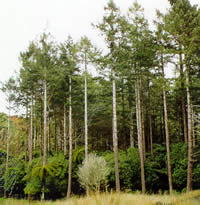
- Upright pyramidal stately tree. Ideal timber tree for cold conditions
but very slow growing. Pruning can be avoided by close planting
of seedlings, otherwise lower branches should be removed to produce
a clear stem for timber production. Evergreen.
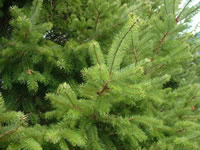
- Crowded, needle-like leaves 30-40 mm long. Blue green colour
above, white banded underneath. New growth forms red/brown pointed
shoots. Strong fruity fragrance.
- Yellow male strobili (pollen cones) grow on underside of shoot
in spring. Pink female strobili develop into 50-80 mm hanging
papery cones.
- Thick, grey, corky, deeply furrowed bark.
- Tolerant of wind, snow and moderate to high rainfall. Dislikes
warm climates and is unsuitable to coastal conditions. Can suffer
form damage due to wind exposure and although adult trees withstand
severe frost, seedlings may require protection if planted in frost
pockets.
- Rotation: 45 to 55 years.
- Wood properties: large amount of hardwood. Pale pink/brown heartwood,
sapwood almost white. Not ground durable unless treated.
- Used for framing, structural beams, cladding.
|
|
|
Click
on image for larger picture
|
|





