 |
|
|
 |

|
|
 |
|
|
 |
|
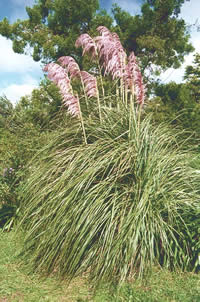
| Purple pampas (Cortaderia jubata) |
| Family: Cortaderiinae |
| Description: |
| Both purple pampas and common pampas are erect, tall, clump-forming, perennial grasses. Both plants have coarse abrasive leaves and will grow up to three metres high. The distinctive and erect flower stems of pampas grass can grow up to five metres high. Purple pampas has purple flower heads that appear in late January and later fade to brown. |
| Other names: |
| Pampas, Cortaderia, cutty grass.. |
| Values at risk: |
| Ecological values, through
the suppression of native plants along forest and streambank margins,
in scrub and secondary forests, and wetlands and coastal areas. Agricultural production, particularly through the suppression of forestry seedlings in planted forests. The plant can also be a nuisance on roadside verges. |
| Strategy rules: |
|
Unless the plant is being used as a hedge, for live fencing or as a shelterbelt, you must destroy all common or purple pampas on your land. ‘Hedgerows and shelterbelts’ are where a group (five or more) of pampas grass plants have been planted in a row for the purpose of providing shelter or screening. However, if you have such a hedgerow or shelterbelt you must maintain and trim the plant to prevent the plants from flowering. When trimming, any flower heads should be collected and disposed of, preferably by burning. After 2012 you will be required to destroy all common or purple pampas on your land, even those plants being used for shelter belts. Alternative plants are discussed below. |
| How to destroy: |
|
Using herbicides to control pampas grass is effective if the correct timing and rates of application are used. Always follow the manufacturer’s directions on the product label and avoid spraying if it will rain before the spray is rain-fast. The rain-fast times for herbicides vary widely by up to five hours so it pays to check, rather than waste spray. |
| Good alternative plants for hedging and shelterbelts: |
While pampas hedges are being phased out, many other plant species can be used for hedging and shelterbelts. The planting of shade trees or shelterbelts can improve farm production. Providing shelter can benefit animal health and planting native plants can enhance landscape values and biodiversity values on your farm. Flaxes, native toetoe and karo are hardy species that will grow in most conditions and will attract native birds as well as providing stock with shelter. For other ideas on what plants to plant, contact a Land Management Officer at the Taranaki Regional Council, see the suggestions on this website or visit www.trc.govt.nz.
|
Click on image for larger picture
Do you know the difference between pampas and native toetoe?

